Sunday, February 27, 2011

Tips for Breaking into Sports Photography


Cuba Gallery: Abstract / art / green / water / fork / macro / photography by ►CubaGallery


Photo Credit: celtics baby clothes


Winthrop University, Rock Hill, SC, student photographer Chris Osborne hopes his experience in sports photography will take him to the next level - his goal for every shot is "Sports Illustrated Cover".

Osborne explains how a sixth sense is valuable in sports photography, but without the basics of photography, you will still miss the shot.

What first attracted you to photography? How did you get started yourself?

Photography was something I could do since I have always been able to see how I wanted things to look. I have started and restarted a few times. My first camera was a 110 mm back in 3rd grade. I moved onto other interests until college, where I got a Coolpix L3. It is good for general use, but trying to shoot basketball did not work at all. So, I purchased a Rebel XT and have not looked back.

What photographers - well known or unknown - inspire you?

Beyond the sports photography culture, two unknowns got me where I am today. The first is my sister. She says that I stole her interest in photography and will not hold back any criticism of my work. The second is Paul, a fellow photographer at the school paper. After seeing one of his pictures in the paper and not liking it at all, I decided that I could do a better job and filled the other sports photographer position. Only later did I learn that an editor and not Paul made the cropping decisions.

What equipment do you use? Is there a certain piece of gear you could not live without?

I am currently using a Canon Rebel XT with the kit 18-55mm lens, Canon 50mm 1.8, Canon 75-300 4-5.6, and a Tamron 28-200mm 4/5.6. My only other add ons are a Canon battery grip and a polarizing filter. Being on a college student budget, I do not buy new equipment unless I will really use it. But if I had to pick one item that I couldn't live without it would be the battery grip. I missed too many shots by flipping the camera the wrong way to shoot vertically or simply missing the shutter button.

Do you have any goals in mind with your photography?

For my sports shot, there is always one basic thought running through my mind - Sports Illustrated cover. I would love to have one someday. For everything else, I think about if I could see the shot hanging on someone's wall. If I cannot, I find something that fits that requirement.

What do you feel are your strengths and weaknesses in sports photography?

As much as I hate to say this one, one of my strengths is that I have a camera that can handle the speed and lighting at college sporting events. Beyond that, I am able to have a personal relationship with most of the athletes and am able to predict fairly well what is about to happen. My weaknesses are that I am still too slow at times to get the shot that I want, despite knowing almost exactly what is about to happen and that I have a tendency to tilt my camera. Also, where the Winthrop athletic department lets me go during games limits what I am able to shoot.

What does it take to be a quality sports photographer?

To be a quality sports photographer, you have to be a little bit psychic. By that I mean that you need to be able to know where to point the camera to get the shot. Some sports are easier than others. What sports do you like to shoot? I like to shoot basketball and volleyball most. They are high intensity and usually have something new to get every time. I like baseball the least because most of the shots are just excessively similar.

What post-processing tools/software do you use? How much does that influence your photography?

When I want better control over the photograph, I will use Photoshop 7 or Gimp depending on which operating system I am working under (desktop runs XP while laptop is in the process of switching over to Linux). I use Picasa for basic editing such as cropping and overall brightness/contrast. I sacrifice the overall control for speed when I have to turn things in to the school paper.

What advice would you give new photographers?

A) Don't get discouraged. Photography is an art, which means you will have to work at it.
B) A good photographer can overcome bad equipment, and good equipment will not make you a good photographer.
C) Less time editing your photographs means you'll have more time to take more, so get things right in camera as much as possible.
D) Try to see all of what there is to shoot, not just the stereotypical snapshots that everyone else will find.

Check out Osborne's photography at http://sapidexistence.com

Photography Insights and Techniques


Cuba Gallery: Urban / retro / vintage / color / bird / design / light / photography by ►CubaGallery


photo source


One might ask what photography is. What is the purpose of taking a photograph? For some, just a simple snap shot will do but, for others, there is more of a destiny to experience in the photograph. Photography captures a split second in time or, simply put, a moment captured in a blink of an eye. Photographers create illusions of realism which resembles the existent world with content and form that are inseparable. In effect, the photographer has generated a story all their own. 

Photography is made from anything perceived. Seeing is believing when the moment is captured on film regardless of the subject matter. No matter how many pictures are taken of the same subject by different individuals, the photographs will never be the same “style” because the subject is in the eye of the beholder. For example, you may like that shiny red 57’ Chevy in the front of the coffee shop, so you take a photograph. Your friend loves the seat in front of the coffee shop window with the reflection of the 57’ Chevy in the glass. There are two distinctly separate shots of the same subject but, emotionally, they are very different images. No two artists are identical and different viewers will never see the same photograph in the same manner. Photographs generate a mood that creates an emotion and they can be background or landscapes or nothing but a mere rust spot with texture. 

Photography not only captures that instantaneous moment in time but also captures a visual reality. Photography, when it was first invented, was used to represent the world accurately with little room or depiction of artistic ability. Thus, the photographer could have been anyone in the crowd, and that person brought forth the way things looked at the time—showing the world what is to be perceived. 

This is not the ways of photography in the 20th century. Photography is now a truly unique art form, and a photograph can hold two and three dimensional space, as well as a one point perspective. Photography gives us the opportunity for aestheticism our everyday world. Our attention is focused on what we would normally dismiss our attention focuses on seeing beyond the believable giving a visual sensation to our minds. A photograph can be captured in one-sixtieth of a second by the shutters of the camera. In effect, art happens in the “blink of an eye”. 

Since Kodak introduced the first hand held camera in 1888, giving photography a new mission and meaning, the world has never been the same. However, the technological advances have affected photography. It has strengthened the use of a camera and allowed the photographer far more precise subjective perceptions of the subject matter. According the book The World of Art, Life Magazine started publication in 1936, and American photography used photography as their tool of disclosure. “Pictures can be beautiful, but must tell facts too,” reveals the text. Photographers must include real life recognition with lines and rhythms of the surface because, without this, the photograph would be unresponsive. As an interesting insight, a horizontal photograph is peaceful; a photograph with less foreground brings dramatization and a photograph with more foreground shows nature connected with unity. 

Photography is different than other art medium, yet the classical compositions brought together by the artists of yesteryears are still used. Photography has many techniques and art forms that differ greatly. For instance, there is black and white photography that the photographer can develop easily in even a small amount of space. According to photographer and Professor of Art Mike Wonser, a dark room can be set up in a bathroom. The light must be blocked out, but the photographs can be developed in the bath tub! So, you do not need much space to work and it is magic to watch the photograph appear. Another simple technique was shared by George Jolokai. He stated “a photographer can carry a bottle of water to add shininess or reflections on the subject matter”. The magic of photography is endless. 

Another tool used in photography is the use of slow or fast shutter speeds. Slow shutter speeds can blur water, but the use of slow shutter speeds requires a tri-pod to prevent blurring the entire photograph. The water will blur because water is in constant motion but the background or other subject matter in the photograph remains still. 

Another form of photography is that of color photography. Color brings depth and musical rhythm and is a very powerful tool to the human senses. Color photography creates a complex interplay between form and content that can create dynamic color contrasts. The photograph process takes time because critical technical decisions must come from the photographer before the release of shutter that results in the capturing of an essence of time and mood on film. 

The basic elements of style, composition, and technique are the photographer’s tools for structure; it is the photographer’s imagination that leaves an impression embedded the minds of the viewer.

References 

Joloki, George (2004, Spring). Lecture Art 101, Central Oregon Community College, Bend< Oregon 

Sayre, Henry M. (2004) A World of Art (4th ed.) Pearson Prentice Hall. 

Wonser, M. (2004, Spring). Art History 203, Central Oregon Community College, Bend< Oregon


Saturday, February 26, 2011

Christmas Photography Tips and Advice


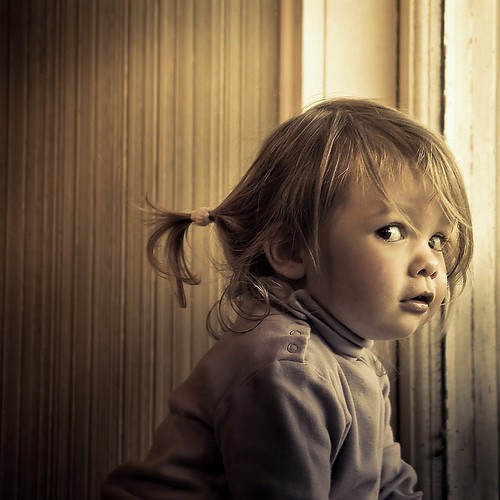
Cuba Gallery: Cute / adorable / child / portrait / eyes / light / photography by ►CubaGallery


credit,credit


For Christmas photography tips, or any sort of photography, we want the best results to come from our time and effort. Christmas photography captures special moments, especially when children are involved. In fact, this leads to my first Christmas photography tip:

(1) Focus on the children first. This admittedly is a bias of mine, but Christmas foremost should be a children's holiday. This applies to gift-giving, and also to photography. If you disagree and/or if adults are at the center of your Christmas, fine, that's just my opinion. Just think of ol' Art Linkletter: "Kids Say the Funniest Things." Kids also make the best photo subjects, and regardless, Christmas (like Trix cereal) is for Kids.

Our Top Ten Christmas photography tips are going to relate to the strategy of taking the best photos, not to the type of camera. That's a whole 'nuther topic. In fact, yours truly is not even a shutterbug. My advice comes from working as a local daily newspaper reporter, among some of the best professional photographers, going back to the 1970s when they still used darkrooms, up to today in the digital age. These Christmas photography tips are geared toward how you interact with your subjects, once the camera is chosen and the lighting adjustments are made.

(2) Don't be one of these photographers who is constantly out front and interrupting things, asking people to pose. For your best Christmas photography, be the fly on the wall. Stay in the background and take candid photos of what's happening, photos in which the subjects don't realize you're taking their photos.

(3) A lower angle (shooting "upward" toward the subjects and the scene) often yields better results. Don't hesitate to sprawl on the floor.

(4) In your Christmas photography, look for sequences of events. A photo is just one moment in time and to capture a sequence, many folks nowadays prefer a video camera. Still, there's nothing like a series of photos. For example: (A) Child awaits anxiously for gift-giving to begin. (B) Child receives wrapped gift. ( C ) Child tears wrapping off of gift. (D) Child reacts to gift.

(5) In fact, your sequence of events could begin hours earlier. Child helps decorate tree. Child puts on Christmas outfit. Etc.

(6) Just because you're staying out of the spotlight with your camera, that doesn't mean you can't be persistent. Patience is a virtue in waiting for just the right moment, just the right shot.

(7) Be a minimalist. Don't try to illustrate the whole scene of the Christmas event at once. If it's a party, take turns focusing on individual participants, or no more than two or three in one frame. If your Christmas photography involves a group of carolers, go ahead and photograph the whole group, but also aim for closeups of one caroler, or a small group.

(8) If you still want some posed Christmas photography for the archives, that's fine. Try to do the posing at the conclusion of the shindig, not at the start or during the middle.

(9) For posed photos, try to keep the number of subjects small. Let's imagine the group of Christmas revelers is 20. Go ahead and shoot the group of 20, but keep in mind that with so many folks in there, their faces are going to be the sizes of dimes. Also shoot "subgroups" with three, four, five people.

(10) When people pose in groups, have them put their heads as close together as possible. This may seem like a minor point, but when you see the results, you'll understand. Faces can be 20 percent larger and up close if we eliminate the wasted space between their heads.

SOURCES

Personal experience

http://digital-photography-school.com/16-christmas-photography-tips

http://www.best-family-photography-tips.com/Christmas-pictures.html

http://photography.about.com/od/christmas/Christmas_Photography.htm

Upgrade Your Digital Photography Studio on a Budget


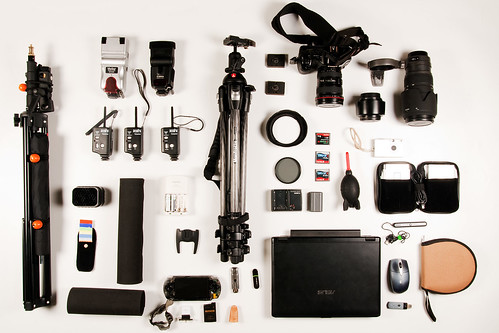
Photography in a Rucksack by Daily Travel Photos .::. Pius Lee


credit


Digital photography is progressing almost as fast as the computer industry. Mega-pixels are multiplying faster than you can count them. As with all advances in technology, a higher price tag is attached. So, how do you upgrade your digital photography studio with out breaking your budget?

Let's go over a few ways to do just that.

Upgrade your Digital Photography Studio - Don't Buy New

The more mega pixels the better, I know. But, if you are using a 5.0 mega pixel camera now, wouldn't a 6.0 one be an upgrade? There is no need to spend the extra $3000 to get the newest 10 mega pixel digital camera.

There are plenty of used camera stores to find newer equipment that will fit your budget as well. KEH offers a huge selection of both new and used digital camera equipment, all of which has been cleaned and tested.

Let's not forget about eBay either. The deals there on new equipment are sometimes better then buying older used equipment. You never know when some college kid is going to sell off his $3000 digital camera just so he can make rent.

Upgrade your Digital Photography Studio - Compensatory Upgrades
Find way to stream line your business. Odds are, you don't have a lot of people working at your digital photography studio. So, you probably wont be buying equipment that saves you money by eliminating workers. Still, there is always new software coming out to help you stream line your business.

Such software may be expensive at first, but will be worth the price. Even if the software does nothing more than free up two hours in your work day, that is two more hours to make money. That is two more hours to see customers. Those customers could then turn into lifetime customers who bring your repeat business and great word of mouth advertising. All because you freed up two hours in your work day.

Upgrade your Digital Photography Studio - Upgrade Only What You Need
Upgrading your digital photography studio doesn't mean you have to spend a fortune on new gear, lights, printers, computers, and what have you. Take some time to really identify what it is in your digital photography studio that needs to be upgraded.

Lets say you bought an expensive sub dye printer years ago to start printing photographs in house. 60,000 prints later, it's just not what it used to be. This doesn't mean you have fork over a huge amount of money to buy a new one. You could out source your printing for a while or you could even look into getting the printer refurbished by the manufacturer.

Upgrade your Digital Photography Studio - Upgrade Your Staff
Not every digital photography studio upgrade is a piece of expensive new gear. Invest some of your budget by training your staff. If you have other photographers working for you, try spending some money on a training workshop. The more your employees know about their job, the better they are at it. These workshops will help increase your staffs skills, but it will also help them get a better picture of what you want. Being on the same wavelength with your employees will also help them operate more efficiently

If you have complicated software programs, consider having a sales rep come out and teach your staff about the software. This goes back the same point, the more your employees know, the better they operate. Often, sales reps will be more than happy to come out and teach refresher courses or how to use new programs free of charge. After all, the happier you are with their product, the more you will buy from them in the future.

These are just a few ways to upgrade your digital photography studio with out breaking your budget. There are always ways to pinch pennies if you think about. The biggest obstacle to get over is the, must have the new stuff, mentality. You almost never need the new stuff, it is almost certainly nothing more than a want. Think before you buy and you are sure to save money in the now and make more in the future.